Fruit trees – a selection of varieties and species


Fruit trees – a selection of varieties and species
Fruit trees are one of the most rewarding investments you can make in your garden. They bring both beauty, fragrance and fresh fruit that can be enjoyed straight from the branch or used in cooking. Whether you have a large garden or just a small terrace, there are fruit trees to suit your needs. In this article, you’ll get an overview of the most important considerations when choosing a fruit tree, as well as inspiration for different varieties and species.
The article presents a wide selection of fruit trees – from classic apple and pear trees to more exotic varieties such as peach and fig. The goal is to provide an overview of characteristics, growth forms and uses, so that you can more easily find the tree that best suits your garden. The information about the products is based on descriptions from producers and retailers and is summarised to give a clear and informative overview.
Factors to consider when buying a fruit tree
When choosing a fruit tree, there are several practical and botanical factors to take into account. Here are some of the most important factors you should consider.
1. Climate and location
Fruit trees thrive best when planted in a climate suitable for the species. Apple and pear trees do well in the Norwegian climate, while more heat-demanding species such as peach and apricot require a sunny and sheltered location. Make sure the soil is well-drained, and avoid depressions where frost can collect.
2. Pollination
Some fruit trees are self-pollinating, while others require pollination from another variety to bear fruit. If you only have room for one tree, it may be an advantage to choose a self-pollinating variety. If you have space for more, you can increase the yield by planting varieties that pollinate each other.
3. Size and growth form
Fruit trees come in many sizes – from dwarf trees suitable for pots and small gardens, to large trees that can grow several metres high. Consider how much space you have, and how quickly you want the tree to grow. Espaliered trees are a good choice for small gardens or as decorative screening.
4. Maintenance and pruning
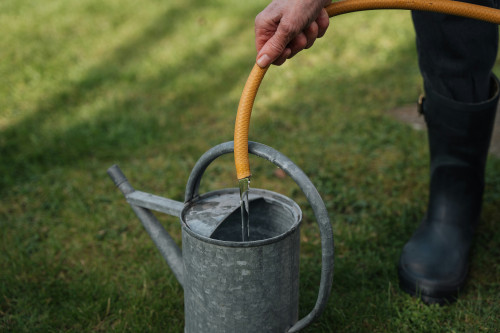
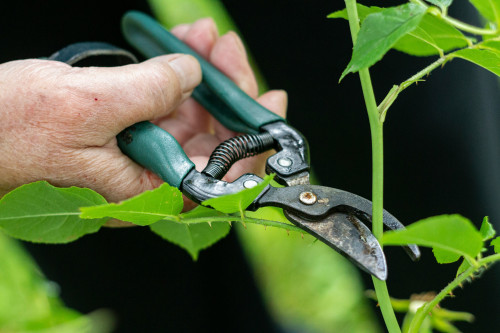
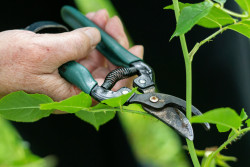
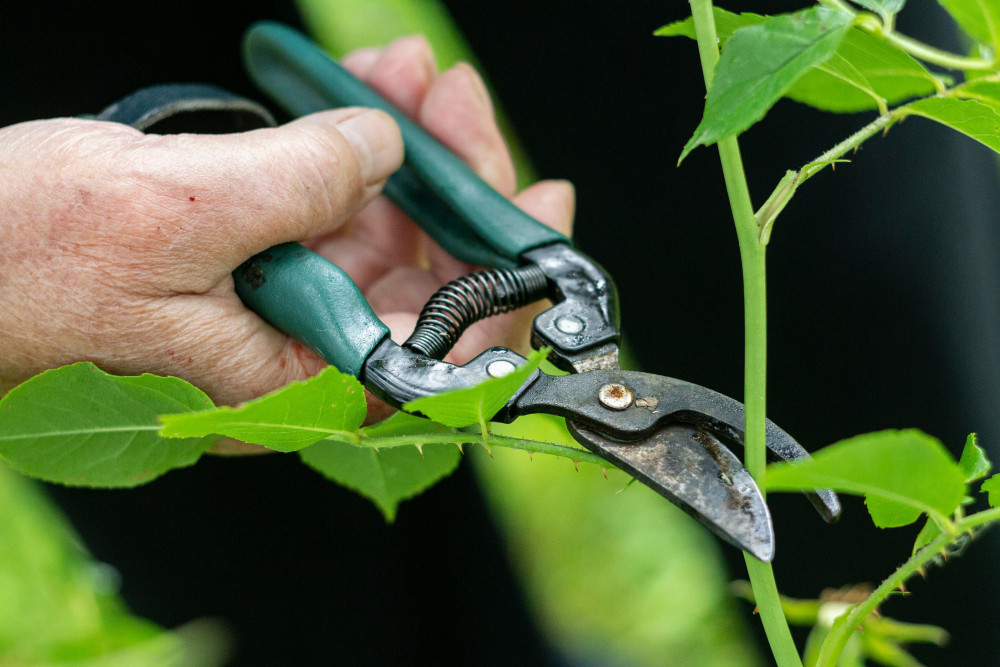
Regular pruning is important to ensure good fruiting and healthy growth. Some species require more pruning than others, so choose a tree that suits the amount of time you want to spend on care. Also remember to fertilise and water during dry periods.
5. Harvest time and use
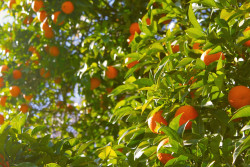
Fruit trees have different ripening times – some give an early harvest in July, while others do not ripen until late summer or autumn. Think about how you want to use the fruit: for fresh eating, baking, juice or jam.
Products in focus
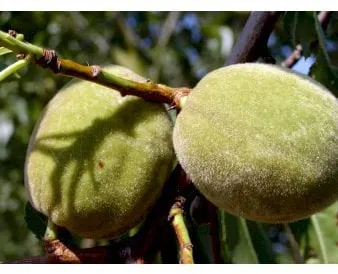
Sweet Almond (Prunus dulcis) is a fruit tree that blooms in April with light pink flowers and gives the garden a distinct spring character. The fruits initially resemble small green peaches, but the flesh is dry and inedible. The kernel in the middle of the fruit is an edible almond that can be used directly or in baking.
The tree thrives best in full sun and nutrient-rich soil. It should be watered and fertilised regularly throughout the growing season to maintain healthy growth and fruiting. Due to the Norwegian climate, cultivation in a greenhouse or in a sheltered location, for example against a south- or west-facing wall, is recommended to protect against frost and fungal diseases.
Sweet Almond has a broad-crowned growth form and can reach a height of 2–4 metres and a width of 3–4 metres. The leaves are elongated and green, and the flowers are white to light pink. The fruits usually ripen in September.
- Flowering: Light pink flowers in April provide a beautiful spring display.
- Edible almonds: The kernel of the fruit can be used like regular almonds.
- Placement: Thrives best in full sun and sheltered from wind and frost.
- Growth form: Broad-crowned tree with moderate growth rate.
- Use: Suitable for gardens and parks as both an ornamental and useful plant.
Pros and cons
- Decorative flowering in spring
- Produces edible almonds
- Can be grown in a greenhouse or in protected open ground
- Suitable for sunny locations
- Sensitive to frost and fungal diseases in open areas
- Requires nutrient-rich soil and regular watering
- The fruit flesh is dry and inedible
Pros and cons
Pros
- Decorative flowering in spring
- Produces edible almonds
- Can be grown in a greenhouse or in protected open ground
- Suitable for sunny locations
Cons
- Sensitive to frost and fungal diseases in open areas
- Requires nutrient-rich soil and regular watering
- The fruit flesh is dry and inedible
Pros
- Decorative flowering in spring
- Produces edible almonds
- Can be grown in a greenhouse or in protected open ground
- Suitable for sunny locations
Cons
- Sensitive to frost and fungal diseases in open areas
- Requires nutrient-rich soil and regular watering
- The fruit flesh is dry and inedible
Specifications
- Botanical name: Prunus dulcis
- Category: Fruit trees & Fruit bushes
- Type: Almond tree
- Flowering period: April (spring)
- Flower colour: White to light pink
- Leaf colour: Green
- Leaf shape: Elongated
- Fruit colour: Brown
- Fruit size: 1–5 cm
- Ripening time: September
- Height: 200–400 cm
- Width: 300–400 cm
- Placement: Full sun
- Growth form: Broad-crowned, moderately growing
- Hardiness: Fair (requires protection from frost)
- Fertilisation level: Moderate
- Optimal growing conditions: Nutrient-rich soil and regular watering
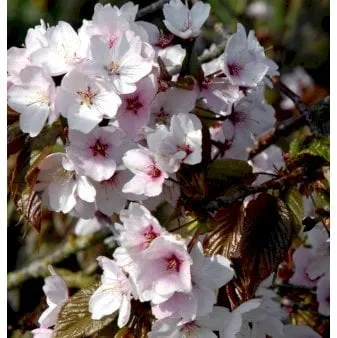
Sakhalin cherry, also known as Prunus sargentii, is a medium-sized deciduous tree that develops a broad, vase-shaped crown. With age, the tree acquires a more spreading and multi-stemmed structure, giving it a distinctive and natural appearance in the garden.
The leaves are medium-sized and elongated with a distinct tip. They emerge in a dark bronze-red tone, later becoming fresh green and ending the season with intense red and orange-red autumn colours. The smooth, reddish-brown bark with light cork spots darkens over time and develops prominent horizontal stripes.
The tree flowers profusely in April and the first half of May with large, light pink flowers that often appear before the leaves. Fruit set is rare, but small dark red berries can be seen in some years.
Sakhalin cherry thrives best in sun to partial shade and prefers a nutrient-rich, well-drained soil. It tolerates many soil types but should not be planted where water stands. In heavy clay soil, the soil can be loosened and gravel or sand added for better drainage.
The tree is suitable as a specimen plant in gardens, parks and avenues, where it can be highlighted as a decorative element. During the establishment phase, staking is recommended to ensure stable growth.
- Profusely flowering spring tree: Large, light pink flowers in April and May.
- Decorative foliage: Changes from bronze-red spring leaves to red and orange-red autumn colours.
- Characteristic growth form: Vase-shaped and later broad-crowned structure.
- Robust and adaptable: Thrives in sun or partial shade in well-drained soil.
- Suitable as an ornamental tree: Well suited as a specimen tree in gardens and parks.
Pros and cons
- Beautiful flowers and striking autumn colours
- Tolerates many soil types
- Suitable as a specimen tree or in groups
- Relatively hardy and robust
- Requires well-drained soil and should not stand in waterlogged soil
- Needs staking during the establishment phase
- Fruit set is rare
Pros and cons
Pros
- Beautiful flowers and striking autumn colours
- Tolerates many soil types
- Suitable as a specimen tree or in groups
- Relatively hardy and robust
Cons
- Requires well-drained soil and should not stand in waterlogged soil
- Needs staking during the establishment phase
- Fruit set is rare
Pros
- Beautiful flowers and striking autumn colours
- Tolerates many soil types
- Suitable as a specimen tree or in groups
- Relatively hardy and robust
Cons
- Requires well-drained soil and should not stand in waterlogged soil
- Needs staking during the establishment phase
- Fruit set is rare
Specifications
- Botanical name: Prunus sargentii
- Norwegian name: Sakhalin cherry
- Category: Japanese cherry / Trees
- Growth form: Vase-shaped, broad-crowned
- Height: 1000–1500 cm
- Width: 150–300 cm
- Flowering: April–May
- Flower colour: Light pink to pink
- Leaf colour: Red-green, bronze-red at emergence
- Autumn colour: Red and orange-red
- Placement: Full sun or partial shade
- Soil type: Nutrient-rich and well-drained garden soil
- Hardiness: Fully hardy
- Use: Gardens and parks
- Wind conditions: Should be placed in a sheltered location
- Fertilisation level: Medium
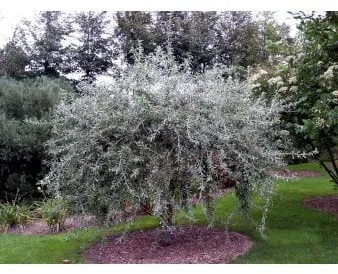
The willow-leaved pear 'Pendula' is a small tree characterised by its weeping and spreading crown. It is often grafted onto a stem, which gives a clear trunk height and a crown that develops from round to umbrella-shaped and later to a screen form.
The leaves are narrow and covered with fine, soft hairs that give a silvery-grey tone in spring and later a grey-green colour. The foliage resembles that of willow or olive trees and contributes to a light and elegant appearance. In autumn, the leaves take on subtle light yellow shades, and leaf fall occurs late in the season.
The bark is initially silvery white due to the many fine hairs but becomes grey and fissured with age. In April and May, the tree blooms with white to cream-white flowers with reddish stamens, which are gathered in corymbs and have a light sweet scent.
After flowering, small greenish-brown fruits may form that are not edible, but birds sometimes take them after frost. The tree thrives best in full sun and in ordinary, well-drained garden soil. It is hardy, wind-tolerant, and drought-resistant once established.
The willow-leaved pear is often used as a specimen tree or in small groups, where its light foliage and weeping growth create contrast and structure in the planting.
- Weeping growth form: Creates an elegant and distinctive appearance in the garden.
- Silvery-grey foliage: Provides a light and contrasting touch against darker plantings.
- Hardy and wind-tolerant: Suitable for Nordic conditions and requires minimal care.
- Spring flowering: White to cream-white flowers in April–May.
- Suitable as an ornamental tree: Works well as a specimen tree or in smaller groups.
Pros and cons
- Decorative weeping growth and silvery-green foliage
- Hardy and drought-tolerant after establishment
- Requires little maintenance
- Thrives in full sun and ordinary garden soil
- The fruits are not edible
- Young trees may need staking during the first seasons
- Prefers well-drained soil and may struggle in heavy, wet soil
Pros and cons
Pros
- Decorative weeping growth and silvery-green foliage
- Hardy and drought-tolerant after establishment
- Requires little maintenance
- Thrives in full sun and ordinary garden soil
Cons
- The fruits are not edible
- Young trees may need staking during the first seasons
- Prefers well-drained soil and may struggle in heavy, wet soil
Pros
- Decorative weeping growth and silvery-green foliage
- Hardy and drought-tolerant after establishment
- Requires little maintenance
- Thrives in full sun and ordinary garden soil
Cons
- The fruits are not edible
- Young trees may need staking during the first seasons
- Prefers well-drained soil and may struggle in heavy, wet soil
Specifications
- Botanical name: Pyrus salicifolia 'Pendula'
- Type: Ornamental tree
- Growth form: Weeping, overhanging, broad-crowned
- Height: 400–700 cm
- Width: 300–600 cm
- Leaf colour: Grey to grey-green
- Flower colour: White to cream-white
- Flowering period: April–May
- Fruit colour: Greenish-brown (not edible)
- Placement: Full sun
- Soil type: Nutrient-rich, well-drained garden soil
- Hardiness: Fully hardy
- Wind conditions: Should be placed in a sheltered location
- Use: Gardens and parks
- Growth: Medium growing
- Ripening time: September–October
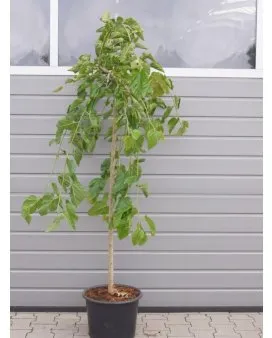
The Weeping Mulberry, botanically known as Morus alba 'Pendula', is an ornamental tree with a characteristic weeping growth form. The tree develops a broad crown with downward-curving branches, giving an elegant and tranquil expression in the garden.
The leaves are heart-shaped and dark green, creating a dense and decorative foliage throughout the summer. In May and June, the tree blooms with small white flowers, which may later be followed by light, white fruits in late summer.
The tree thrives best in full sun and in ordinary, nutrient-rich garden soil. It grows moderately and usually reaches a height of around 3 metres and a width of about 2 metres, making it suitable for medium-sized gardens or as a specimen tree in parks.
The Weeping Mulberry is moderately hardy and requires only limited maintenance, making it a practical choice for garden owners who want a decorative tree with a natural, weeping appearance.
- Weeping growth form: Creates an elegant and distinctive expression in the garden.
- Flowering in May–June: Small white flowers give a light and summery feel.
- Fruits: White mulberries that ripen in late summer.
- Placement: Thrives best in full sun and nutrient-rich garden soil.
- Size: Approx. 3 metres high and 2 metres wide – suitable for medium-sized gardens.
Pros and cons
- Decorative weeping growth form
- Suitable for sunny locations
- Relatively easy to care for
- Provides both flowers and fruits
- Moderate hardiness – may require protection in harsh winters
- Requires space to spread its broad crown
Pros and cons
Pros
- Decorative weeping growth form
- Suitable for sunny locations
- Relatively easy to care for
- Provides both flowers and fruits
Cons
- Moderate hardiness – may require protection in harsh winters
- Requires space to spread its broad crown
Pros
- Decorative weeping growth form
- Suitable for sunny locations
- Relatively easy to care for
- Provides both flowers and fruits
Cons
- Moderate hardiness – may require protection in harsh winters
- Requires space to spread its broad crown
Specifications
- Botanical name: Morus alba 'Pendula'
- Type: Fruit tree / ornamental tree
- Size: Medium-sized
- Height: Approx. 3 metres
- Width: Approx. 2 metres
- Leaf shape: Heart-shaped
- Leaf colour: Dark green
- Flower colour: White
- Flowering period: May – June
- Fruit colour: White
- Growth form: Broad-crowned, weeping
- Growth: Moderately growing
- Placement: Full sun
- Soil type: Ordinary nutrient-rich garden soil
- Hardiness: Moderate
- Fertilisation level: Moderate
- Use: Gardens and parks
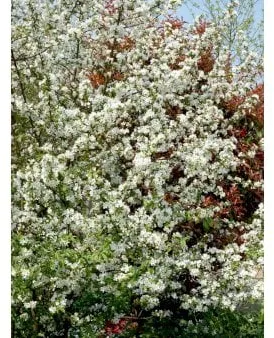
Common Wild Apple (Malus sylvestris) is a moderately growing tree with a naturally spreading and broad crown. The species is native to Norway and is characterised by its great hardiness and ability to thrive in many soil types, including where the soil is periodically moist.
The leaves are small, oval and fresh green with light yellow autumn colours. Young shoots are brownish-green, while older trunks develop a grey-brown, crusty bark that can flake off in small patches.
In spring, the tree is covered with many small white to pinkish-white flowers that attract beneficial insects. Later, small, oval yellow-green fruits of 3–4 cm develop, which are sour in taste. The fruits can be used for jelly or marmalade and serve as food for birds during the winter months.
The tree thrives best in full sun or partial shade and requires no special growing conditions. It can be planted individually, in groups or as part of a shelterbelt, where its wind resistance and natural form come into their own. When planting, staking is recommended for the first two seasons to ensure good establishment.
- Native species: Naturally occurring in Norway and adapted to local conditions.
- Decorative flowering: Many small white to pinkish-white flowers in spring.
- Edible fruits: Small yellow-green apples, suitable for jelly and marmalade.
- High hardiness: Tolerates wind and varied soil types, including moist ground.
- Ecological value: Attracts insects and provides food for birds.
Pros and cons
- Robust and wind-resistant tree, suitable for Norwegian conditions
- Attracts pollinators and birds
- Decorative flowering and autumn colour
- Can be used both as an ornamental tree and in shelterbelts
- The fruits are sour and not suitable for fresh eating
- Requires staking during the establishment phase for stable growth
Pros and cons
Pros
- Robust and wind-resistant tree, suitable for Norwegian conditions
- Attracts pollinators and birds
- Decorative flowering and autumn colour
- Can be used both as an ornamental tree and in shelterbelts
Cons
- The fruits are sour and not suitable for fresh eating
- Requires staking during the establishment phase for stable growth
Pros
- Robust and wind-resistant tree, suitable for Norwegian conditions
- Attracts pollinators and birds
- Decorative flowering and autumn colour
- Can be used both as an ornamental tree and in shelterbelts
Cons
- The fruits are sour and not suitable for fresh eating
- Requires staking during the establishment phase for stable growth
Specifications
- Botanical name: Malus sylvestris
- Category: Ornamental apple
- Main category: Trees
- Growth form: Broad-crowned
- Growth: Moderate to vigorous
- Height: 600–700 cm
- Width: 300–400 cm
- Flowering: April–May
- Flower colour: White to pinkish-white
- Leaf colour: Green, yellow autumn foliage
- Fruit colour: Yellow-green
- Fruit size: 3–4 cm
- Placement: Full sun or partial shade
- Hardiness: Fully hardy
- Soil type: Nutrient-rich, well-drained garden soil; tolerates moist ground
- Use: Gardens, parks, shelterbelts
Product descriptions
Sweet Almond (Prunus dulcis) is a fruit tree that blooms in April with light pink flowers and gives the garden a distinct spring character. The fruits initially resemble small green peaches, but the flesh is dry and inedible. The kernel in the middle of the fruit is an edible almond that can be used directly or in baking.
The tree thrives best in full sun and nutrient-rich soil. It should be watered and fertilised regularly throughout the growing season to maintain healthy growth and fruiting. Due to the Norwegian climate, cultivation in a greenhouse or in a sheltered location, for example against a south- or west-facing wall, is recommended to protect against frost and fungal diseases.
Sweet Almond has a broad-crowned growth form and can reach a height of 2–4 metres and a width of 3–4 metres. The leaves are elongated and green, and the flowers are white to light pink. The fruits usually ripen in September.
- Flowering: Light pink flowers in April provide a beautiful spring display.
- Edible almonds: The kernel of the fruit can be used like regular almonds.
- Placement: Thrives best in full sun and sheltered from wind and frost.
- Growth form: Broad-crowned tree with moderate growth rate.
- Use: Suitable for gardens and parks as both an ornamental and useful plant.
Pros and cons
- Decorative flowering in spring
- Produces edible almonds
- Can be grown in a greenhouse or in protected open ground
- Suitable for sunny locations
- Sensitive to frost and fungal diseases in open areas
- Requires nutrient-rich soil and regular watering
- The fruit flesh is dry and inedible
Pros and cons
Pros
- Decorative flowering in spring
- Produces edible almonds
- Can be grown in a greenhouse or in protected open ground
- Suitable for sunny locations
Cons
- Sensitive to frost and fungal diseases in open areas
- Requires nutrient-rich soil and regular watering
- The fruit flesh is dry and inedible
Pros
- Decorative flowering in spring
- Produces edible almonds
- Can be grown in a greenhouse or in protected open ground
- Suitable for sunny locations
Cons
- Sensitive to frost and fungal diseases in open areas
- Requires nutrient-rich soil and regular watering
- The fruit flesh is dry and inedible
Specifications
- Botanical name: Prunus dulcis
- Category: Fruit trees & Fruit bushes
- Type: Almond tree
- Flowering period: April (spring)
- Flower colour: White to light pink
- Leaf colour: Green
- Leaf shape: Elongated
- Fruit colour: Brown
- Fruit size: 1–5 cm
- Ripening time: September
- Height: 200–400 cm
- Width: 300–400 cm
- Placement: Full sun
- Growth form: Broad-crowned, moderately growing
- Hardiness: Fair (requires protection from frost)
- Fertilisation level: Moderate
- Optimal growing conditions: Nutrient-rich soil and regular watering
Sakhalin cherry, also known as Prunus sargentii, is a medium-sized deciduous tree that develops a broad, vase-shaped crown. With age, the tree acquires a more spreading and multi-stemmed structure, giving it a distinctive and natural appearance in the garden.
The leaves are medium-sized and elongated with a distinct tip. They emerge in a dark bronze-red tone, later becoming fresh green and ending the season with intense red and orange-red autumn colours. The smooth, reddish-brown bark with light cork spots darkens over time and develops prominent horizontal stripes.
The tree flowers profusely in April and the first half of May with large, light pink flowers that often appear before the leaves. Fruit set is rare, but small dark red berries can be seen in some years.
Sakhalin cherry thrives best in sun to partial shade and prefers a nutrient-rich, well-drained soil. It tolerates many soil types but should not be planted where water stands. In heavy clay soil, the soil can be loosened and gravel or sand added for better drainage.
The tree is suitable as a specimen plant in gardens, parks and avenues, where it can be highlighted as a decorative element. During the establishment phase, staking is recommended to ensure stable growth.
- Profusely flowering spring tree: Large, light pink flowers in April and May.
- Decorative foliage: Changes from bronze-red spring leaves to red and orange-red autumn colours.
- Characteristic growth form: Vase-shaped and later broad-crowned structure.
- Robust and adaptable: Thrives in sun or partial shade in well-drained soil.
- Suitable as an ornamental tree: Well suited as a specimen tree in gardens and parks.
Pros and cons
- Beautiful flowers and striking autumn colours
- Tolerates many soil types
- Suitable as a specimen tree or in groups
- Relatively hardy and robust
- Requires well-drained soil and should not stand in waterlogged soil
- Needs staking during the establishment phase
- Fruit set is rare
Pros and cons
Pros
- Beautiful flowers and striking autumn colours
- Tolerates many soil types
- Suitable as a specimen tree or in groups
- Relatively hardy and robust
Cons
- Requires well-drained soil and should not stand in waterlogged soil
- Needs staking during the establishment phase
- Fruit set is rare
Pros
- Beautiful flowers and striking autumn colours
- Tolerates many soil types
- Suitable as a specimen tree or in groups
- Relatively hardy and robust
Cons
- Requires well-drained soil and should not stand in waterlogged soil
- Needs staking during the establishment phase
- Fruit set is rare
Specifications
- Botanical name: Prunus sargentii
- Norwegian name: Sakhalin cherry
- Category: Japanese cherry / Trees
- Growth form: Vase-shaped, broad-crowned
- Height: 1000–1500 cm
- Width: 150–300 cm
- Flowering: April–May
- Flower colour: Light pink to pink
- Leaf colour: Red-green, bronze-red at emergence
- Autumn colour: Red and orange-red
- Placement: Full sun or partial shade
- Soil type: Nutrient-rich and well-drained garden soil
- Hardiness: Fully hardy
- Use: Gardens and parks
- Wind conditions: Should be placed in a sheltered location
- Fertilisation level: Medium
The willow-leaved pear 'Pendula' is a small tree characterised by its weeping and spreading crown. It is often grafted onto a stem, which gives a clear trunk height and a crown that develops from round to umbrella-shaped and later to a screen form.
The leaves are narrow and covered with fine, soft hairs that give a silvery-grey tone in spring and later a grey-green colour. The foliage resembles that of willow or olive trees and contributes to a light and elegant appearance. In autumn, the leaves take on subtle light yellow shades, and leaf fall occurs late in the season.
The bark is initially silvery white due to the many fine hairs but becomes grey and fissured with age. In April and May, the tree blooms with white to cream-white flowers with reddish stamens, which are gathered in corymbs and have a light sweet scent.
After flowering, small greenish-brown fruits may form that are not edible, but birds sometimes take them after frost. The tree thrives best in full sun and in ordinary, well-drained garden soil. It is hardy, wind-tolerant, and drought-resistant once established.
The willow-leaved pear is often used as a specimen tree or in small groups, where its light foliage and weeping growth create contrast and structure in the planting.
- Weeping growth form: Creates an elegant and distinctive appearance in the garden.
- Silvery-grey foliage: Provides a light and contrasting touch against darker plantings.
- Hardy and wind-tolerant: Suitable for Nordic conditions and requires minimal care.
- Spring flowering: White to cream-white flowers in April–May.
- Suitable as an ornamental tree: Works well as a specimen tree or in smaller groups.
Pros and cons
- Decorative weeping growth and silvery-green foliage
- Hardy and drought-tolerant after establishment
- Requires little maintenance
- Thrives in full sun and ordinary garden soil
- The fruits are not edible
- Young trees may need staking during the first seasons
- Prefers well-drained soil and may struggle in heavy, wet soil
Pros and cons
Pros
- Decorative weeping growth and silvery-green foliage
- Hardy and drought-tolerant after establishment
- Requires little maintenance
- Thrives in full sun and ordinary garden soil
Cons
- The fruits are not edible
- Young trees may need staking during the first seasons
- Prefers well-drained soil and may struggle in heavy, wet soil
Pros
- Decorative weeping growth and silvery-green foliage
- Hardy and drought-tolerant after establishment
- Requires little maintenance
- Thrives in full sun and ordinary garden soil
Cons
- The fruits are not edible
- Young trees may need staking during the first seasons
- Prefers well-drained soil and may struggle in heavy, wet soil
Specifications
- Botanical name: Pyrus salicifolia 'Pendula'
- Type: Ornamental tree
- Growth form: Weeping, overhanging, broad-crowned
- Height: 400–700 cm
- Width: 300–600 cm
- Leaf colour: Grey to grey-green
- Flower colour: White to cream-white
- Flowering period: April–May
- Fruit colour: Greenish-brown (not edible)
- Placement: Full sun
- Soil type: Nutrient-rich, well-drained garden soil
- Hardiness: Fully hardy
- Wind conditions: Should be placed in a sheltered location
- Use: Gardens and parks
- Growth: Medium growing
- Ripening time: September–October
The Weeping Mulberry, botanically known as Morus alba 'Pendula', is an ornamental tree with a characteristic weeping growth form. The tree develops a broad crown with downward-curving branches, giving an elegant and tranquil expression in the garden.
The leaves are heart-shaped and dark green, creating a dense and decorative foliage throughout the summer. In May and June, the tree blooms with small white flowers, which may later be followed by light, white fruits in late summer.
The tree thrives best in full sun and in ordinary, nutrient-rich garden soil. It grows moderately and usually reaches a height of around 3 metres and a width of about 2 metres, making it suitable for medium-sized gardens or as a specimen tree in parks.
The Weeping Mulberry is moderately hardy and requires only limited maintenance, making it a practical choice for garden owners who want a decorative tree with a natural, weeping appearance.
- Weeping growth form: Creates an elegant and distinctive expression in the garden.
- Flowering in May–June: Small white flowers give a light and summery feel.
- Fruits: White mulberries that ripen in late summer.
- Placement: Thrives best in full sun and nutrient-rich garden soil.
- Size: Approx. 3 metres high and 2 metres wide – suitable for medium-sized gardens.
Pros and cons
- Decorative weeping growth form
- Suitable for sunny locations
- Relatively easy to care for
- Provides both flowers and fruits
- Moderate hardiness – may require protection in harsh winters
- Requires space to spread its broad crown
Pros and cons
Pros
- Decorative weeping growth form
- Suitable for sunny locations
- Relatively easy to care for
- Provides both flowers and fruits
Cons
- Moderate hardiness – may require protection in harsh winters
- Requires space to spread its broad crown
Pros
- Decorative weeping growth form
- Suitable for sunny locations
- Relatively easy to care for
- Provides both flowers and fruits
Cons
- Moderate hardiness – may require protection in harsh winters
- Requires space to spread its broad crown
Specifications
- Botanical name: Morus alba 'Pendula'
- Type: Fruit tree / ornamental tree
- Size: Medium-sized
- Height: Approx. 3 metres
- Width: Approx. 2 metres
- Leaf shape: Heart-shaped
- Leaf colour: Dark green
- Flower colour: White
- Flowering period: May – June
- Fruit colour: White
- Growth form: Broad-crowned, weeping
- Growth: Moderately growing
- Placement: Full sun
- Soil type: Ordinary nutrient-rich garden soil
- Hardiness: Moderate
- Fertilisation level: Moderate
- Use: Gardens and parks
Common Wild Apple (Malus sylvestris) is a moderately growing tree with a naturally spreading and broad crown. The species is native to Norway and is characterised by its great hardiness and ability to thrive in many soil types, including where the soil is periodically moist.
The leaves are small, oval and fresh green with light yellow autumn colours. Young shoots are brownish-green, while older trunks develop a grey-brown, crusty bark that can flake off in small patches.
In spring, the tree is covered with many small white to pinkish-white flowers that attract beneficial insects. Later, small, oval yellow-green fruits of 3–4 cm develop, which are sour in taste. The fruits can be used for jelly or marmalade and serve as food for birds during the winter months.
The tree thrives best in full sun or partial shade and requires no special growing conditions. It can be planted individually, in groups or as part of a shelterbelt, where its wind resistance and natural form come into their own. When planting, staking is recommended for the first two seasons to ensure good establishment.
- Native species: Naturally occurring in Norway and adapted to local conditions.
- Decorative flowering: Many small white to pinkish-white flowers in spring.
- Edible fruits: Small yellow-green apples, suitable for jelly and marmalade.
- High hardiness: Tolerates wind and varied soil types, including moist ground.
- Ecological value: Attracts insects and provides food for birds.
Pros and cons
- Robust and wind-resistant tree, suitable for Norwegian conditions
- Attracts pollinators and birds
- Decorative flowering and autumn colour
- Can be used both as an ornamental tree and in shelterbelts
- The fruits are sour and not suitable for fresh eating
- Requires staking during the establishment phase for stable growth
Pros and cons
Pros
- Robust and wind-resistant tree, suitable for Norwegian conditions
- Attracts pollinators and birds
- Decorative flowering and autumn colour
- Can be used both as an ornamental tree and in shelterbelts
Cons
- The fruits are sour and not suitable for fresh eating
- Requires staking during the establishment phase for stable growth
Pros
- Robust and wind-resistant tree, suitable for Norwegian conditions
- Attracts pollinators and birds
- Decorative flowering and autumn colour
- Can be used both as an ornamental tree and in shelterbelts
Cons
- The fruits are sour and not suitable for fresh eating
- Requires staking during the establishment phase for stable growth
Specifications
- Botanical name: Malus sylvestris
- Category: Ornamental apple
- Main category: Trees
- Growth form: Broad-crowned
- Growth: Moderate to vigorous
- Height: 600–700 cm
- Width: 300–400 cm
- Flowering: April–May
- Flower colour: White to pinkish-white
- Leaf colour: Green, yellow autumn foliage
- Fruit colour: Yellow-green
- Fruit size: 3–4 cm
- Placement: Full sun or partial shade
- Hardiness: Fully hardy
- Soil type: Nutrient-rich, well-drained garden soil; tolerates moist ground
- Use: Gardens, parks, shelterbelts
Different types of fruit trees
There are many types of fruit trees, each with its own distinctive characteristics and advantages. The choice depends on taste, space and climate.
1. Apple trees
The apple tree is the most popular fruit tree in Norway. There are a wealth of varieties with different flavours, colours and ripening times. Some varieties are best for fresh eating, while others are ideal for juice or baking.
2. Pear trees
Pear trees produce sweet and juicy fruits that can be enjoyed straight from the tree. They require a sunny location and thrive best in shelter. Many varieties need a pollination partner to give a good yield.
3. Plum trees
Plums are easy to grow and give abundant harvests. They come in many colours and sizes, from small mirabelles to large, juicy dessert plums. Most varieties are self-pollinating and require minimal care.
4. Cherry trees
Cherry trees come as both sweet and sour cherries. Sweet cherries often require pollination from another variety, while sour cherries are usually self-pollinating. They bloom beautifully in spring and add a decorative touch to the garden.
5. Peach, apricot and fig
These more exotic fruit trees can be grown in Norway if they are given a warm and sheltered location – for example against a south-facing wall. They require a little extra care, but reward you with unique and flavourful fruits.
Different brands of fruit trees
There are many producers and nurseries that offer high-quality fruit trees. Here are some examples of well-known suppliers.
Jespers Planteskole
A Danish nursery with a wide selection of fruit trees, including both classic varieties and newer cultivars. They emphasise quality and advice for both beginners and experienced gardeners.
Plantetorvet
Plantetorvet.dk offers a large selection of fruit trees online with detailed descriptions of growing and pollination conditions. The range spans from traditional Danish varieties to rarer species.
Lundhede Planteskole
Lundhede specialises in robust and hardy fruit trees suitable for the Nordic climate. They offer both small trees for pots and larger trees for established gardens.
Bilka Garden Centre
Bilka offers a wide range of fruit trees at reasonable prices. The range is well suited for hobby gardeners who want easy access to popular varieties of good quality.
Plantorama
Plantorama combines plant sales with advice and inspiration. They have a varied selection of fruit trees and often offer seasonal campaigns where you can find good deals on popular varieties.
Frequently asked questions
When is the best time to plant fruit trees?
The best time to plant fruit trees is in autumn or early spring, while the soil is still moist and the tree is dormant. This gives the roots time to establish before the growing season begins.
How much space does a fruit tree need?
It depends on the variety and growth form. Dwarf trees can manage with a few square metres, while large trees require 4–6 metres of space from other plants. Espaliered trees can be grown closer to walls and fences.
Should I prune my fruit tree every year?
Yes, regular pruning promotes healthy growth and good fruiting. It is best to prune in late summer or early spring, depending on the tree species.
Can fruit trees be grown in pots?
Yes, especially dwarf and columnar trees are well suited for pots. Make sure to use a large pot with good drainage and nutrient-rich soil. Remember to water regularly, as pots dry out faster than garden soil.
How quickly does a fruit tree bear fruit?
Most fruit trees begin to bear fruit after 2–4 years, depending on the variety and growing conditions. Dwarf and grafted trees can often produce fruit already after the first or second year.
Læs også: